



Effortless music making from day one
Many people are convinced that you can only make music effortlessly after practising at least half an hour a day for years. That is the 'traditional view'. But it turns out to be wrong. At the Improvisatie Academie we follow a new, unique approach. An approach where you learn to experience effortlessness and flow from the very first lesson. From there, from that wonderful feeling, you learn all kinds of skills – while continuously experiencing that effortlessness and flow…! This approach closely resembles the way young children learn their mother tongue.
"To experience effortlessness and flow, and to be able to touch people with your playing, it is not necessary to practise at least half an hour every day for years. At the Improvisatie Academie you first learn to 'Tonediving': to give total attention to your sound and to become one with your music. To 'go deep', to enter a state of flow – and then to stay in that flow."
Three learning tracks: heart – hands – head
Children constantly combine their heart, hands and head during their learning process. In other words: they experience something (heart), they do something (hands), they understand something (head). Scientific research shows that this approach produces by far the best and fastest results. This is how you learn to make music effortlessly:
- you feel (heart)
- you play (hands)
- you understand (head)
At the Improvisatie Academie we work with these three learning tracks: heart – hands – head.
Learn to make music like a child learns to talk
This is how you start:
1. Start simple: start with a 'tonedive' (sound dive)®. (Children start with one word; you start with one sound.)
2. Immerse yourself completely in your sound and enjoy it. (That is the essence of Tonediving. It causes your body to produce oxytocin: that accelerates your learning process, and from the very beginning you play from effortlessness and flow.)
3. Grow effortlessly towards more and longer. (Children first learn single words, then two words combined, and only later do they form full sentences; you first play single notes, then two notes combined, and only later do you play musical 'sentences', i.e. songs.)
4. Learn the musical 'grammar' playfully. (I'm talking about 'harmony': keys, chords, etc. Just like children, you learn them effortlessly, playfully.)
5. First enjoy playing, and only then learn to read music. (Again, just like children: they first learn to talk, and only then learn to read and write.)
6. Label 'mistakes' as 'experiments'. (Yes, children do that too! This takes the pressure and stress out of your learning process, and you develop your technique playfully.)
7. Books, videos, and if desired workshops and/or private lessons guide you. (These contain more than twenty-five years of discoveries in music education, and experience with the question: 'How do I teach my students to achieve maximum satisfaction and effortlessness with minimal effort?')

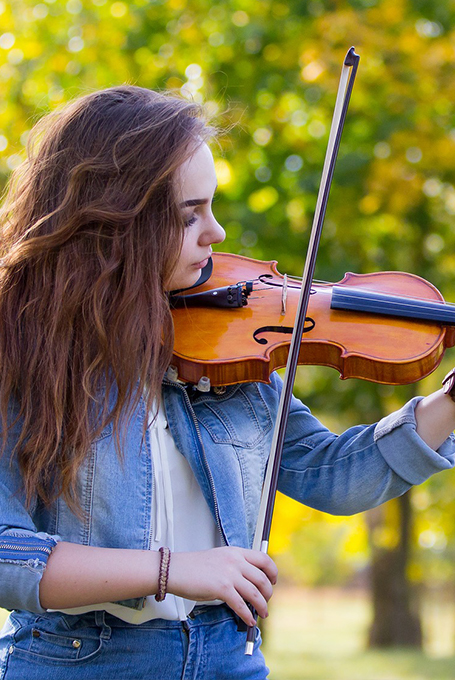
When you 'go deep', you don't need to practise for hours
Continuously experiencing effortlessness and flow while making music, touching others with your music – and all this without studying for hours every day… 'That's impossible!' Oh yes it is, thanks to these five things:
1. You start simple. By starting really simple (with a tonedive®) you experience effortlessness from day one.
2. You produce oxytocin with every step. This enormously accelerates your learning process.
3. You go deep. Every day you train to go one step deeper into the experience of your music. When your experience is deep, when you listen very attentively, you become one with your sound. Then your perception of time changes. A few minutes: that feels like an hour! And you can learn a great deal in just a few minutes!
4. You open yourself to what your music does to you. This greatly increases the chance that you will touch others with your playing.
5. Through Tonediving you discover that a single note can be enough to touch people and connect them. Once you have discovered that, making music becomes one great source of joy and effortlessness.
Vondel, Beethoven and small happiness
A child learns to talk effortlessly, playfully. But if that child later wants to recite the collected works of the poet Vondel by heart, well, then the child does have to practise for hours a day for months (or even years): there's no getting around that.
It is the same with our approach at the Improvisatie Academie. At the Improvisatie Academie you learn to make music effortlessly, playfully, in your own style. But if you later want to play all the Beethoven sonatas by heart, well, then you do have to practise for hours a day for months (or even years): there's no getting around that.
Some people will associate 'effortless music making' with stage artists performing effortlessly for an audience of a thousand. That is not the focus at the Improvisatie Academie. Our focus is on effortless music making as a small happiness: every day you make a short improvisation that can make you feel deeply happy and connected. And your friends or family members who come to visit and hear you play, too.
Not everyone will become a stage artist, just as not everyone will recite Vondel for an audience of a thousand. But everyone can learn to talk effortlessly. And in the same way, everyone can learn to make music effortlessly. Including you!
Three learning tracks: heart – hands – head
At the Improvisatie Academie we use three learning tracks: heart – hands – head. The three learning tracks complement each other.
Learning track 'Effortless music making from your heart' (your heart is central)
Learning track 'Effortless learning to improvise' (your hands are central)
Learning track 'Effortless insight into harmony' (your head is central)

Heart
1. Learning track 'Effortless music making from your heart' (your heart is central).
Why?
Because every note you play from your heart has the power to touch people. This is what music making is all about.
For whom?
For everyone who has never made music or improvised, but longs to do so. Also for those who can already make music, but would like to learn to always play every note from the heart. Effortlessly. From a state of flow. If you have never made music or improvised and would like to learn, this is a wonderful first step.
What will you learn?
You learn Tonediving. Tonediving® is improvising a short piece of music of about thirty seconds. Despite its brevity, a tonedive has expressive power and the ability to touch people. A tonedive can consist of one note, but can also consist of multiple notes.
I want to learn this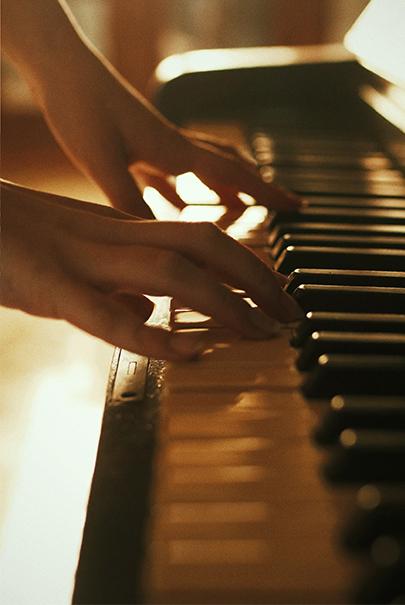
Hands
2. Learning track 'Effortless learning to improvise' (your hands are central)
Why?
Because it is wonderful to experience the freedom and connection of effortless improvisation. Because when you improvise you can feel and follow your own impulses, and because that feels amazing.
For whom?
For everyone who plays an instrument at a somewhat advanced level (and is therefore no longer a complete beginner) and who cannot or barely improvise, but longs to do so.
What will you learn?
You learn to improvise. In other words: 'Tonediving and swimming on'. All aspects of improvisation are covered.
I want to learn this
Head
3. Learning track 'Effortless insight into harmony' (your head is central)
Why?
Because everything becomes easier when you understand what you are doing.
For whom?
For everyone who wants to learn the 'grammar of music' (i.e. 'harmony') in an effortless way. No prior knowledge is required, we start from the very beginning.
What will you learn?
Keys, chords, the circle of fifths, modulations, the church modes, and so on. Your head is central here, because it is about understanding. But feeling ('How does a fifth degree sound?', 'What do I experience with this modulation?') and playing ('Create an improvisation with the Neapolitan sixth chord', 'Try improvising with the whole-tone scale') are connected to understanding. So that what you learn does not stay stuck in your head, but becomes connected to your heart and your hands.
I want to learn this