



Personal guidance
Full attention for every participant

Innovative materials
See improvisation from a completely new perspective

Expert
More than 25 years of experience guiding musicians

Registered course
The course meets CRKBO quality standards
What is tonediving?
Tonediving is improvising a short piece of music of roughly thirty seconds and listening to it intensely. Despite its brevity, a tonedive has expressive power and the ability to touch people.
A tonedive can consist of multiple notes, but even a single note can be sufficient. The essence of tonediving is that you play that one note (or those multiple notes) with your whole being. With enormous intensity and attention.
This changes something in your consciousness. Your capacity to learn increases greatly. Your involvement with your music grows, you become one with your music. By training this daily, you'll play much more beautifully. Your stage confidence increases. You learn to make music effortlessly.
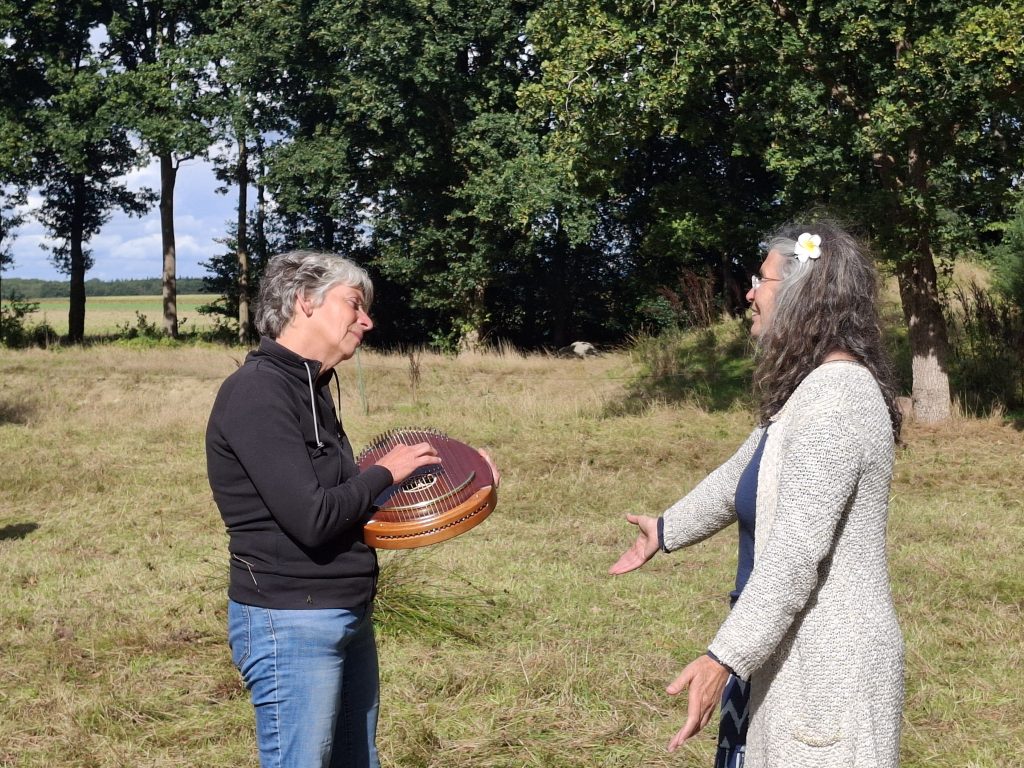
Who is it for?
Tonediving works at any musical level. Advanced musicians will notice that their music gains much more expressive power. And if you've never made music before, the tonedive can be a beautiful beginning of a lifelong musical journey.
Mindfulness for musicians
In this course you learn everything about tonediving. It teaches you to enter a state of flow with the very first note you play, to stay in that flow, and to experience the magic of music-making and the joy of being one with your instrument. Every day. Because that's simply something you can train.
And the great thing is: it hardly takes any time. A tonedive only needs to last about 30 seconds. Just like a dive into water. Tonediving is an extremely powerful course in paying attention. A kind of mindfulness for musicians.
Tonediving is a new, simple method that anyone can learn, even if you've never played an instrument before. In this course you'll be guided step by step in learning how you too can learn to tonediving.

Benefits of tonediving
Daily tonediving has an enormous effect on your music-making. Without having to practice for hours, you'll experience the following while making music:
- You'll play much more beautifully and musically.
- Your sound gains much more expressive power.
- The chance that you'll touch others with your playing becomes much, much greater.
- Your music becomes much more intense.
In addition, a daily tonedive also has a powerful, positive effect on the rest of your day: it carries over into your life. The attention and flow you train during daily tonediving, you take with you. Tonediving is a source of joy in life.
Daily tonediving
The wonderful effects of tonediving are achieved especially when you truly tonedive daily. Experience shows that in practice it's not always easy to make tonediving a daily habit. That's why this course also pays attention to the question: "How do you make tonediving part of your routine?"
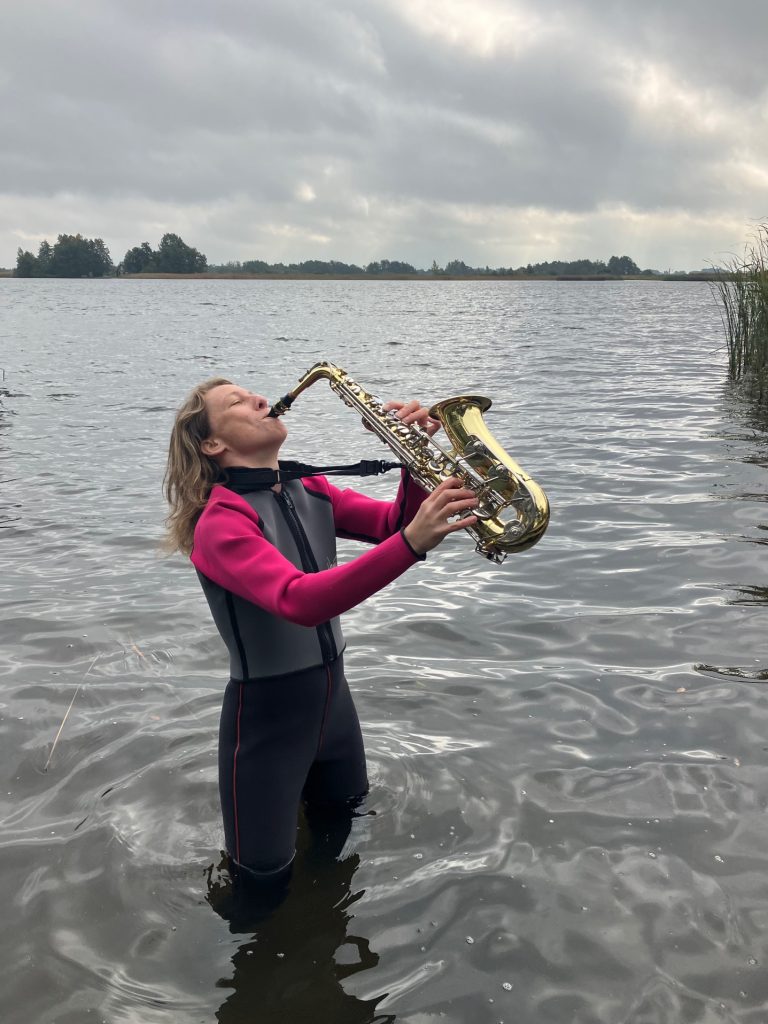
After a tonedive you can choose: shall I continue making music or stop? Both are fine. You do what you feel like. In this course you also learn how to continue making music after a tonedive, or 'tonediving and keep swimming': how a tonedive can grow into a full improvisation. You learn to carry the intensity you trained with your tonedive into a longer improvisation, or into an existing composition.
Structure of the tonediving course
- Two full-day group sessions of six hours of course time plus a one-hour break with a served lunch
- Tips for continuing at home
Study load
The homework load of the course: at minimum you are expected to make at least one tonedive every day. That means a study load of at least 30 seconds per day.
What do the students think?
Before I learned tonediving, I always felt behind my instrument as if I was running after a bus. I was full of stress and never felt good enough. Since I make a tonedive every day, I feel as if I'm sitting in a limousine while playing piano.

My violin students have -- through tonediving -- started listening much more intensely. As a result, their sound has improved enormously from a technical standpoint.

Now that I've been making a tonedive every day for a few weeks, my playing has changed. I'm now IN the note.

My daily tonedive has given me much more self-confidence. Because of that, I dare much more. On stage too.

What does the course cost?
Tuition
The cost of the course is EUR 295. This includes 2x lunch and the course book Tonediving. The Improvisation Academy is accredited by the CRKBO and is therefore exempt from VAT.
Discount?
If you really want to take the course but cannot afford the cost, please contact us. If the course is your dream, we believe that cost should not be an obstacle to realizing your dream!
More information and registration
Does the Tonediving course appeal to you and would you like to sign up? Click here.
If you're thinking: 'The tonediving course might be something for me, but I still have one or more questions,' please email your questions to robijntilanus@gmail.com. Always include your phone number in your email: Robijn may call you back or leave a message, if she feels that's the best way to respond.
Sign upFAQ
You can participate with any instrument. No instruments are excluded. Singers are also welcome.
The course location is: Dorpsstraat 39, Uffelte, South-West Drenthe, The Netherlands. A beautiful farmhouse on one hectare of land, a hundred meters from a stunning nature reserve with forest, heather, sand drifts, small pools and two dolmens.
The course starts once a year.
The group sessions are given in a small group (minimum four, maximum ten participants).
That's not necessary. Tonediving works at any musical level. For tonediving, it doesn't matter how advanced your technical skills are.
We start at 10:30 AM sharp (doors open at 10:15 AM). We finish at approximately 5:30 PM.
If you're coming from far away and can't make the trip in the morning, you're welcome to stay the evening before. Expect basic comfort, not a luxury hotel. We ask you to bring your own bottom sheet (or sleeping bag liner), pillowcase and duvet cover. We provide duvets, blankets and a bed. If you prefer camping, that's also possible: there's plenty of room on our grounds for your tent or camper. You can also choose to book a B&B or small hotel nearby if you'd like more comfort.
Uffelte is located in the south-west corner of Drenthe. From the Randstad it's roughly an hour and a half by car, depending on your starting point. If you come by train, go to Meppel station. From there take bus 28 towards Dwingeloo. After about fifteen minutes get off at the Anserweg stop in Uffelte (Note: do NOT take the Dorpsstraat stop in Uffelte, as it's much further to walk. Also do NOT take the Dorpsstraat stop in Havelte, as that's the wrong village). From the Anserweg stop it's about a ten-minute walk to Dorpsstraat 39.
Absolutely! Please let us know your dietary requirements well in advance by email.